
"coffee farming systems"
3000 article(s) found

Panamanian Caesar Louis Manor single bean variety, brand recommendation and manor introduction
For the exchange of professional baristas, please follow the coffee workshop (Wechat official account cafe_style) Caesar Louis Manor Caesar Louis in Panama single bean species, brand recommendation and manor introduction Caesar Louis is the most famous cooperative in the Boquete Pokai butterfly producing area of Ricky Province, headquartered in the valley of the volcanic belt, the company was founded in 1979 and has joined more than 300 small farms, including Berlina,

Brazilian Coffee Brand Syrador Coffee Chima Manor Bourbon semi-washed Brazilian Bourbon Coffee
Professional coffee knowledge exchange more coffee bean information please follow Coffee Workshop (Wechat official account cafe_style) Brazil-Siladochima Manor Bourbon varieties semi-washed Brazil-PatrocinioFz Macaubas De CimaBourbon Semi Washed region Minas Gerais, Patrosinio Farm owner Crocio Jozekast in Silado region

Ethiopian pastoral coffee cultivation system coffee bean cultivation system distributed in Ethiopia
(photo from: national Geographic Chinese website Photo: Amivitale,Panos) according to Qianjie Coffee Consulting, 90% of coffee in Ethiopia comes from pastoral, forest and semi-forest, but large-scale corporate cultivation is rare in Ethiopia. According to the scale and model, the cultivation of Ethiopian coffee can be divided into four types: 1, forest coffee Forest C

Introduction of coffee beans and coffee trees in Kenya
Kenya is bordered to the north by Ethiopia, the origin of Arabica coffee trees, but it was not until the beginning of the 20th century that coffee cultivation began. In the 19th century, missionaries introduced Arabica trees from the leaves, but did not plant them in large quantities. It was not until 1893 that coffee was cultivated on a large scale because of the introduction of Brazil's ancient bourbon seeds. That is to say, Kenyan coffee is of Brazilian origin, because of water.

Grading, price, raw bean and baking curve of single bean at Caesar Louis Manor in Panama
Professional barista exchanges please follow the coffee workshop (Wechat official account cafe_style) Panama Caesar Louis Manor single bean classification, price, raw beans and baking curve Belina Manor is located in the most famous Baru Volcano Bokui District, the family has been passed on for three generations so far more than 300 small family farm owners have planted coffee in an environmentally friendly way in the Poquette region.

What is the planting history of Kenya AA Matilakali treatment plant? Flavor and taste characteristics?
Professional coffee knowledge exchange more coffee bean information please follow the coffee workshop (Wechat official account cafe_style) Kenya AA Matirakali processing plant what is the planting history? Flavor and taste characteristics? Kenya is a model country for producing fine coffee beans. Coffee was introduced from Britain in 1900, and only the traditional Arabica did not have the best coffee tree species in Kenya until 1950.

Introduction to the characteristics of Hawaiian Fine Coffee Flavor Manor
In the old days of Hawaii, there was a strict social hierarchy. The Karp system divides people's grades and stipulates that men are superior to women. The highest social classes are chiefs and priests, the lowest are slaves, and those in the middle are civilians. The Karp system stipulates where people of different levels fish and hunt, where they farm and harvest, where they swim and play on what beach, what kind of food they eat, and how they dress.

What are the characteristics of coffee beans at Caesar Louis Manor in Panama? how much coffee is Caesar Louis Manor?
For the exchange of professional baristas, please pay attention to the coffee workshop (Wechat official account cafe_style) Caesar Louis Manor coffee beans in Panama. Caesar Louis Manor Coffee how much is the coffee? Casa Louise Casa Ruiz and his partners grow coffee in an environmentally friendly way that follows the local tradition in Bogut, but in order to improve the quality of raw beans, it is different from the past.

Introduction of Kenyan Fine Coffee Kenny
Some buyers, especially Japanese businessmen, have expressed dissatisfaction with the Kenyan coffee industry system. Some businessmen say that the quality of coffee in the country has declined, and point out that buying directly from farmers may be a way to improve the quality. But in any case, Kenya's detailed rules and regulations and sound procedures are a model for all coffee producing countries to learn from.

Flavor characteristics, producing areas and cooking parameters of single bean at Caesar Louis Manor in Panama
Professional barista exchanges please follow the coffee workshop (Wechat official account cafe_style) Panama Caesar Louis Manor single bean flavor characteristics, production areas and brewing parameters introduction: Panama Caesar Louis (Casa Ruiz, S.A.) Manor, founded in 1920, is located in the Baru Volcano (Baru Volcano) Boquete producing area, the geographical location of this producing area

Flavor and taste of coffee manor in Kenya Berman Manor Ethiopia
Kenya is bordered to the north by Ethiopia, the origin of Arabica coffee trees, but it was not until the beginning of the 20th century that coffee cultivation began. In the 19th century, missionaries introduced Arabica trees from the leaves, but did not plant them in large quantities. It was not until 1893 that coffee was cultivated on a large scale because of the introduction of Brazil's ancient bourbon seeds. That is to say, Kenyan coffee is of Brazilian origin, because of water.
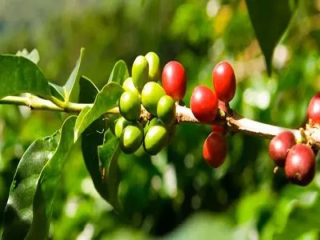
Fair Trade Organization cooperates with Satelligence to expand the scope of coffee production monitoring in response to EU regulations
Recently, Fairtrade International announced a new partnership with Satelligence to extend satellite monitoring of forest areas and farms to all certified coffee producers around the world, with the aim of linking Fairtrade cooperatives with their member farms and deforestation risk data.

Kenyan coffee beans with strong, sweet and mellow thickness introduce fine coffee.
Kenya is bordered to the north by Ethiopia, the origin of Arabica coffee trees, but it was not until the beginning of the 20th century that coffee cultivation began. In the 19th century, missionaries introduced Arabica trees from the leaves, but did not plant them in large quantities. It was not until 1893 that coffee was cultivated on a large scale because of the introduction of Brazil's ancient bourbon seeds. That is to say, Kenyan coffee is of Brazilian origin, because of water.

Berman Manor, one of the largest coffee growing farms in Kenya
There are two types of coffee farms in Kenya. one is a large planting farm that covers an area of more than five acres, but the average elevation is low. In the case of Kenyan coffee, the coffee beans of the large farms are of medium quality. The best Kenya beans are produced in small farms, most of which are located in the foothills or volcanic slopes above 5,000 to 6,000 feet. Each small farmer has a capacity of only 20 to 70 bags per season and is unable to invest.

Manor Ipanima, Brazil-introduction to Dulce handmade coffee
Professional coffee knowledge exchange more coffee bean information please follow the coffee workshop (Wechat official account cafe_style) Brazil's Ipanema estate, is also a historic coffee farm. Since its establishment in 1969, it has inherited experience, professional and modern equipment, and a solid and strict quality control system, creating a boutique coffee produced. (to get a set of qualities

Sustainable Development Strategy of Ramla and Hartman, Gerisha Manor in Panama
Professional baristas follow the Coffee Workshop (Wechat official account cafe_style) although La Mula does not have any official certification, from an environmental and social point of view, the farm is designed as a model of sustainable development. The agricultural philosophy originally designed finally became the guiding ideology of agricultural development and agricultural management. Despite the potential benefits of being certified as a farm, Finc

How to treat fresh coffee fruit into raw coffee beans?
The variety of coffee treated with raw beans certainly determines the natural flavor, but the treatment of raw beans determines the acquired quality. Selected coffee attaches great importance to flavor and quality, so it pays special attention to the technology and details of processing.

What are the characteristics of Kenyan coffee beans
There are two types of coffee farms in Kenya. One is a large plantation that covers an area of more than five acres, but the average elevation is low. In the case of Kenyan coffee, the coffee beans of the large farms are of medium quality. The best Kenyan beans come from small farms, most of which are located in the foothills or volcanic slopes above 5,000 to 6,000 feet. Each small farmer has a capacity of only 20 to 70 bags per season.